


Mobile Phone Storage for Schools: A Practical Guide to the New Guidance
Mobile Phone Storage for Schools: A Practical Guide to the New Guidance
Schools across England are reviewing how mobile phones are managed following updated statutory guidance from the Department for Education.
The guidance became statutory on 29 June 2026 and schools should begin following it from 1 September 2026. It states that schools should be mobile phone-free environments by default and should have a policy prohibiting the use of mobile phones throughout the school day, including lessons, breaktimes, lunchtimes and the time between lessons.
For many schools, the key question is not simply whether pupils should use their phones, but how devices should be managed safely and consistently during the day.
Secure mobile phone storage for schools can provide a practical answer. Solutions range from individual school phone lockers to staff-controlled collection systems. The right option will depend on pupil numbers, available space, security requirements and how the school intends to operate its mobile phone policy.
What Does the New Mobile Phone Guidance Mean for Schools?
The Department for Education expects schools to implement a policy under which pupils do not have access to their mobile phones throughout the school day.
Headteachers can decide how this is achieved within the individual context of their school. The guidance gives examples including pupils storing phones in lockers or handing devices to staff at the beginning of the school day.
This does not mean every school must use the same system. Schools will need to consider:
- Whether pupils are permitted to bring phones onto the premises
- Where devices will be kept during the school day
- Who will control access to stored phones
- How phones will be collected and returned
- How the policy will be communicated to pupils and parents
- What exceptions or reasonable adjustments may be required
- How sixth-form, boarding or residential pupils will be managed
The guidance applies to England and recognises that some pupils may require access to a phone for medical needs, disability-related reasons or other individual circumstances. Schools must continue to meet their legal duties and consider reasonable adjustments where required.
Why Do Schools Need a Mobile Phone Storage System?
Simply asking pupils to keep phones switched off in their bags may be suitable for some schools. However, it can make policies more difficult to monitor and enforce consistently.
A clearly managed phone storage system can help schools:
- Remove access to mobile phones during lessons and social times
- Reduce distractions and classroom disruption
- Establish a consistent process across the school
- Keep devices organised during the day
- Reduce the risk of phones becoming mixed up
- Provide a clear collection and return procedure
- Allow pupils to carry a phone while travelling to and from school
- Support staff when applying the school’s mobile phone policy
The DfE guidance identifies loss of focus, classroom disruption and increased bullying among the risks associated with mobile phone use. It also states that pupils should be taught about the benefits of a mobile phone-free environment.
The storage method chosen should support the policy rather than create additional administration for staff.
Four Mobile Phone Storage Options for Schools
There is no single solution suitable for every school. The following comparison outlines four common approaches.
1. Individual School Phone Lockers
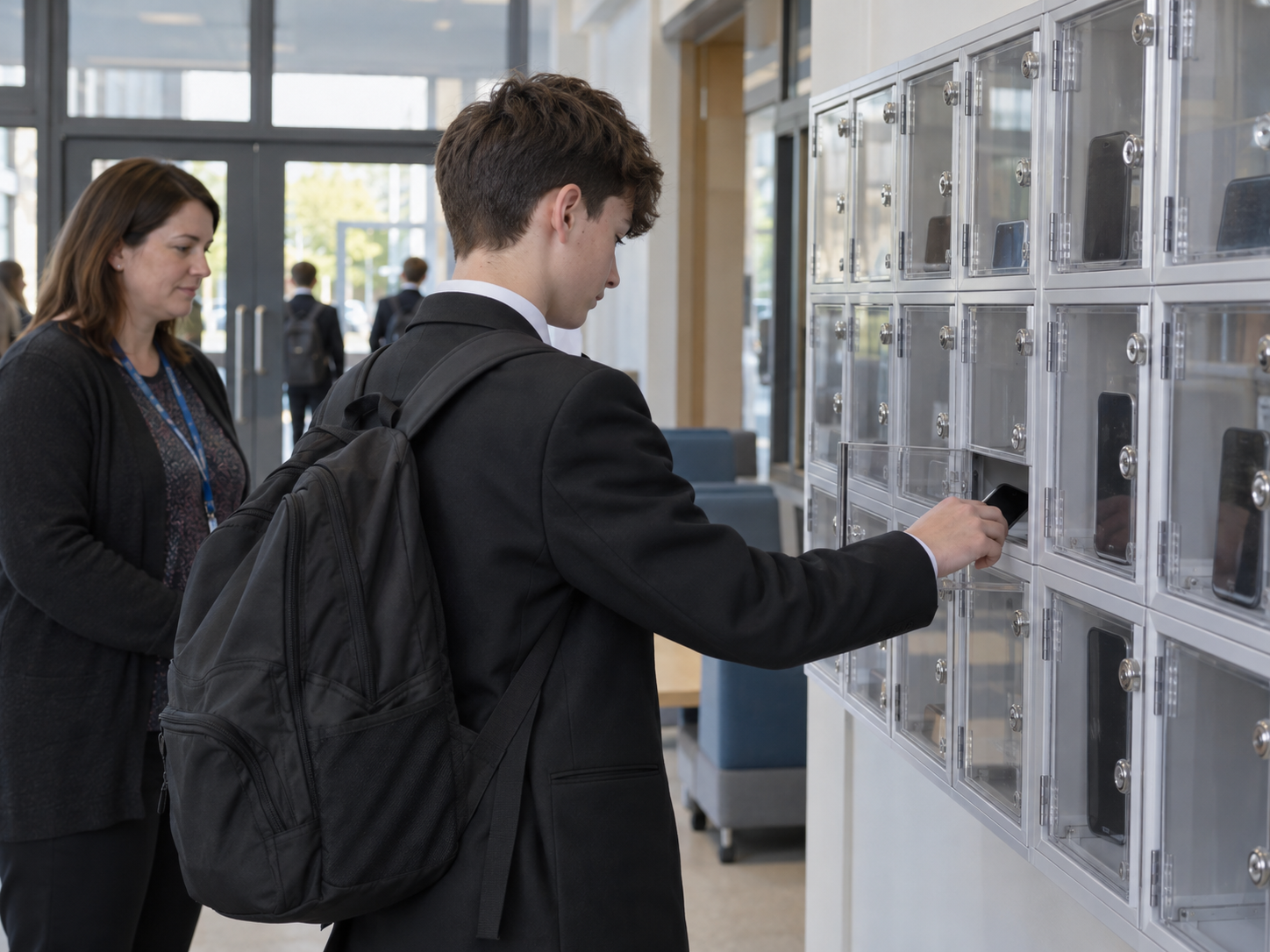
Purpose-designed mobile phone lockers provide individual compartments for storing pupils’ devices.
They are particularly suitable for schools that want a structured collection and return process while keeping each phone in a separate space. Units can be positioned in an agreed collection area, reception space, corridor or another supervised location.
Advantages
- Each phone is stored separately
- Provides a clear and organised process
- Suitable for controlled collection and return
- Helps prevent devices from becoming mixed together
- Can be scaled by installing multiple units
- Clear doors make it easier to identify whether compartments are occupied
- Different locking and colour options may be available
- Charging can be incorporated where required
Considerations
- The school must calculate how many compartments are needed
- A suitable installation location will be required
- The collection and return process must be planned
- The school will need to decide who controls the keys or locks
Springfield’s phone lockers for schools provide secure storage designed for the controlled collection and return of mobile phones in educational environments.
The units include simple slots for quick drop-off and clear compartment doors, helping users identify their device while it remains securely stored. Cam locks or hasp locks are available as standard, with alternative locking arrangements available on request.
A wide range of colour finishes is available, and an optional charging facility can also be specified.
2. Staff-Controlled Phone Collection
Some schools ask pupils to hand their phones directly to a member of staff at the beginning of the day.
The phones may then be stored in a secure cupboard, office or designated collection point before being returned at the end of the day.
Advantages
- Staff retain control over the devices
- Can work without providing every pupil with direct locker access
- May be suitable for smaller groups or year groups
- Creates a clear handover process
Considerations
- Collection may take significant staff time
- Phones must be labelled and organised carefully
- Devices can become mixed together without separate compartments
- Staff need to manage access throughout the day
- The process may become difficult with large pupil numbers
This approach may work well in smaller settings but can become more challenging when several hundred devices are collected each morning.
3. Classroom Phone Holders or Trays
A classroom-based system involves pupils placing their phones into a numbered holder, tray or storage unit at the start of a lesson.
Advantages
- Simple to introduce within individual classrooms
- Lower initial cost than a whole-school locker installation
- Allows teachers to see whether phones have been handed in
- Useful where phones are managed lesson by lesson
Considerations
- Devices may be moved several times during the day
- Responsibility is placed on individual classroom staff
- Open holders generally provide less security
- Pupils may still carry phones between lessons
- The process may vary between teachers and departments
This approach may be useful where a school’s policy focuses mainly on phone use during lessons. It may be less suitable where the aim is to remove access throughout the entire school day.
4. Phones Kept in Bags or Existing Pupil Lockers
Some schools may require phones to remain switched off inside school bags or existing personal lockers.
Advantages
- Makes use of existing storage
- Does not require a separate collection process
- May involve little or no additional furniture
- Pupils retain their devices for travel before and after school
Considerations
- Phones may remain accessible to pupils
- Staff cannot easily confirm whether devices are being used
- Existing lockers may not be located conveniently
- Not all schools provide individual pupil lockers
- The approach relies heavily on pupils following the policy
This method may be adequate in some settings, but schools should consider whether it supports the level of consistency and control they are seeking.
Which Phone Storage Solution Is Right for Your School?
Before choosing a system, schools should map out how the policy will work in practice.
Number of Pupils
Begin by calculating how many pupils will need phone storage at the same time.
A school does not necessarily need storage for its entire roll if the system is being introduced for particular year groups. However, allowing additional capacity may make the system easier to expand later.
Collection and Return Process
Consider where pupils will deposit and collect their phones.
A successful system should avoid long queues and should be easy for staff to supervise. Larger schools may benefit from separate storage points for different year groups, houses or buildings.
Level of Security
Schools should decide whether compartments need individual locks, staff-controlled locks or another arrangement.
They should also establish:
- Who will hold keys
- Whether pupils or staff will operate the locks
- What happens if a key is lost
- How access is managed during an emergency
- How unclaimed devices are handled
Available Space
Phone lockers can hold a large number of devices within a relatively compact area, but the position of each unit is important.
The location should be accessible during collection periods without obstructing corridors, entrances or emergency routes.
Visibility
Clear locker doors can make it easier to identify stored phones without opening every compartment. They can also reassure pupils that their device remains in place.
Schools should balance visibility with their own security and safeguarding procedures.
Charging Requirements
Most schools will only need secure storage. However, charging may be helpful in boarding environments, residential settings or other situations where devices are stored for extended periods.
Where charging is required, the electrical specification, location and management process should be considered at the start of the project.
Exceptions and Reasonable Adjustments
The DfE guidance makes clear that some pupils may require access to a phone for medical or disability-related reasons.
For example, a pupil may use a phone connected to a continuous glucose monitoring system. Schools should make appropriate arrangements based on the pupil’s individual circumstances rather than applying a storage policy without exception.
Planning a Controlled Collection and Return System
The furniture is only one part of a successful phone storage process. Schools should also create a clear operating procedure.
This may include:
- Allocating each pupil a numbered compartment.
- Establishing a set drop-off time and location.
- Confirming whether pupils or staff operate the locks.
- Recording any device handed in outside the normal process.
- Setting a controlled collection time at the end of the day.
- Creating a procedure for forgotten keys or unclaimed phones.
- Explaining the system clearly to parents, pupils and staff.
The DfE guidance says schools should publish details of their mobile phone policy and ensure staff, pupils and parents understand how it will be implemented.
A straightforward storage process can make the policy easier to understand and apply consistently.
Frequently Asked Questions
Do schools have to install mobile phone lockers?
No. The statutory guidance does not require every school to install phone lockers.
It states that headteachers should decide how to create a mobile phone-free environment within their own school context. Lockers and staff collection systems are included as examples of approaches already used by schools.
When does the new mobile phone guidance apply?
The guidance became statutory on 29 June 2026. Schools in England should begin following it from 1 September 2026.
Can pupils still bring phones to school?
That will depend on the individual school’s policy.
Some schools may prevent pupils from bringing phones onto the premises, while others may allow devices for travelling to and from school but require them to be handed in or securely stored throughout the day.
What is the safest way to store pupils’ phones?
The appropriate solution will depend on the school’s requirements. Individual lockable compartments provide a structured way to separate, organise and secure devices.
Schools should also consider supervision, key management, collection procedures and the location of the storage unit.
How many phone lockers will a school need?
This will depend on the number of pupils included in the policy and the number of compartments within each unit.
Schools should calculate peak demand rather than average daily use and consider whether spare capacity will be needed for future growth or additional year groups.
Can school phone lockers include charging?
Yes. Charging can be added to Springfield’s school phone lockers as an optional specification.
Schools should confirm whether charging is genuinely required, as most day-storage applications only need secure individual compartments.
What locking options are available?
Springfield’s phone lockers are available with cam locks or hasp locks as standard. Other locking options can be discussed depending on the school’s preferred collection and access process.
Can phone lockers be supplied in different colours?
Yes. A wide range of colour finishes is available, allowing the units to complement existing school interiors, house colours or departmental schemes.
Secure Phone Lockers for Schools
Springfield supplies secure phone lockers for schools designed to support controlled device collection and return.
Key features include:
- Secure individual phone compartments
- Simple slots for quick device drop-off
- Clear doors for easy identification
- Cam or hasp locks as standard
- Alternative locking options available on request
- Optional charging facilities
- A wide range of colour finishes
- Configurations suitable for different pupil numbers
With schools reviewing their policies ahead of September 2026, planning the storage and collection process early can help ensure the system is practical, clearly communicated and ready for the new academic year.
Speak to the Springfield team for advice on capacity, finishes, locking options and the most suitable phone locker arrangement for your school.
Related products
-
Sale!
 Add to Basket This product has multiple variants. The options may be chosen on the product page
Phone Lockers | Secure Mobile Phone Storage
From: £268.00ex.VAT -
Sale!
 Add to Basket
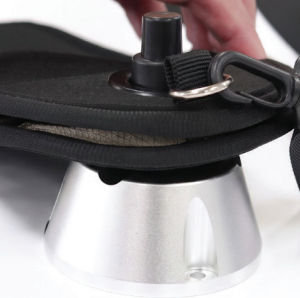
GO2 Magnet for Phone Pouch
List Price:Our Price: £64.80 ex.VAT -
Sale!
 Add to Basket
GO2 Phone Pouch
List Price:Our Price: £19.90 ex.VAT -
Sale!
 Add to Basket This product has multiple variants. The options may be chosen on the product page
Springfield 15 Compartment Charge Locker
From: £795.00ex.VAT